Celebrating London’s digital inclusion changemakers: Melissa, Founder of Bridge the Gap
Good Things Foundation spoke with Melissa Francis, the CEO and founder of Bridge the Gap Ending Digital Poverty C.I.C. Bridge The Gap is a hub in Hackney, offering digital workshops, devices and data to those who need it. As a member of the London Digital Inclusion Network hosted by Good Things Foundation, Melissa’s journey is a masterclass in how lived experience can spark a community-wide revolution.
Where it began
For Melissa, the digital divide was close to home.
“Bridge the Gap started from my own lived experience as a disabled parent and carer”, she explained, “we moved home the day before the COVID lockdown. With two children who also have additional needs, I think overnight everything just changed, everything moved online literally. My children needed devices. I spoke to other parents and realised there was a huge need for it. My children were able to go to school, however, there were other parents out there that needed extra help.”
Taking £100 out of her own pocket, Melissa supported two parents with subsidised devices. That small act of solidarity was the seed. Today, that seed has grown into a vital service supporting residents across London and beyond.
The why
Melissa stresses the importance of community that sparked the idea to join the National Digital Inclusion Network.
“We joined because we needed partnerships, structure and access to further resources to meet the high level of demand that was far bigger than us in itself. Being part of the network helped us strengthen our offer, deepen our understanding of digital inclusion and connect with other organisations who were also facing similar challenges to us. For a grassroots organisation like us for example the network really does give us credibility but also a fantastic community and practical tools that have actually helped us grow.”
Services
Through the National Databank and partnership with Good Things Foundation, Bridge the Gap provides the following services:
- The National Databank: Providing essential SIM cards and data.
- Tailored Workshops: From one-to-one sessions to group drop-ins where “no question is a silly question.”
- Device Schemes: Getting hardware into the hands of those who need it most.
- Signposting: Ensuring that even if they can’t help directly, no one is left without a path forward.
The challenges
Running a hub is about navigating high demand with low resources. Melissa explains that as a disabled founder balancing personal health and caring responsibilities, the path hasn’t always been easy.
“So our biggest challenges till today have been capacity, sustainability and emotional labour. It’s been tiring. We are a very small team and often relying on volunteers while trying to meet increasing needs has just been so strenuous.”
Unlike larger corporations, Bridge the Gap doesn’t have a fleet of data analysts or marketing departments, with a key barrier as “ being able to have the ability to show the full scale of our impact, because of all the setbacks we’ve actually had. They rely on “little but powerful” teams and the trust they’ve built within the community. Sometimes, that means making the hard choice to pause services to avoid burnout.
Although these challenges are ongoing, Melissa and the team are doing what they can to ensure they always provide service to those who need it.
“We’re community led as well as volunteer led. We’ve had to simplify our operations, create clearer processes and how we then show up in our community. I invest a lot of time to try and connect with partners to see how we can even be more sustainable. It’s about the partnerships because then at least coming together, we are able to strengthen how we show up in the community and support people because we’re reaching a wider audience.”
“We make the best of our small team – we’re little but we’re very powerful.”
The response
Bridge The Gap have received incredible feedback and support on their work.
“It’s been overwhelmingly positive. People tell us they feel seen, supported and less alone, which is really great because that helps us to see how we’re combating isolation. We’ve had parents reconnect with school work, we’ve had older residents feeling confident online, job seekers gaining new skills, families relieved because their children finally have access to learning. We’ve supported hundreds with devices, SIM cards and thousands have benefited from our outreach.”
“We’re known now not just for providing equipment but for providing patience, dignity and sensitive support, which means a lot to other people in our community.”
Melissa’s message
For Melissa, digital access is a fundamental right, not a luxury. She stresses that “digital access is no longer optional. It affects people’s health, education, finance, employment, and social connection. When someone is digitally excluded, they are shut out of essential parts of daily life and that deepens the social and economic inequality…digital inclusion is really about empowerment and that’s what we do at Bridge the Gap”
To smaller organisations hesitant about joining The National Digital Inclusion Network, Melissa has one message: Join. “The Network gives us structure, learning tools, and a sense of community that keeps us going when things get challenging. You don’t have to be a big organisation – what matters is your commitment.”
This blog was written by Madeleine Ruse, Communications Officer at Good Things Foundation, using material gathered by Sophie Charlton, in conversation with Melissa.

Madeleine Ruse
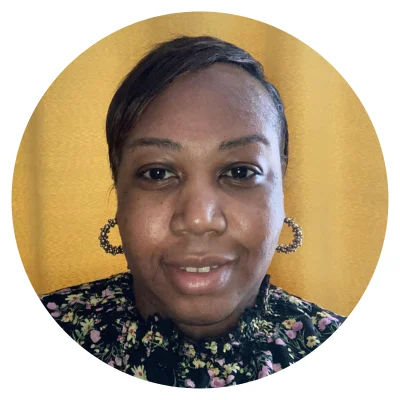
Melissa Francis