What can a starship simulation tell us about public service provision?
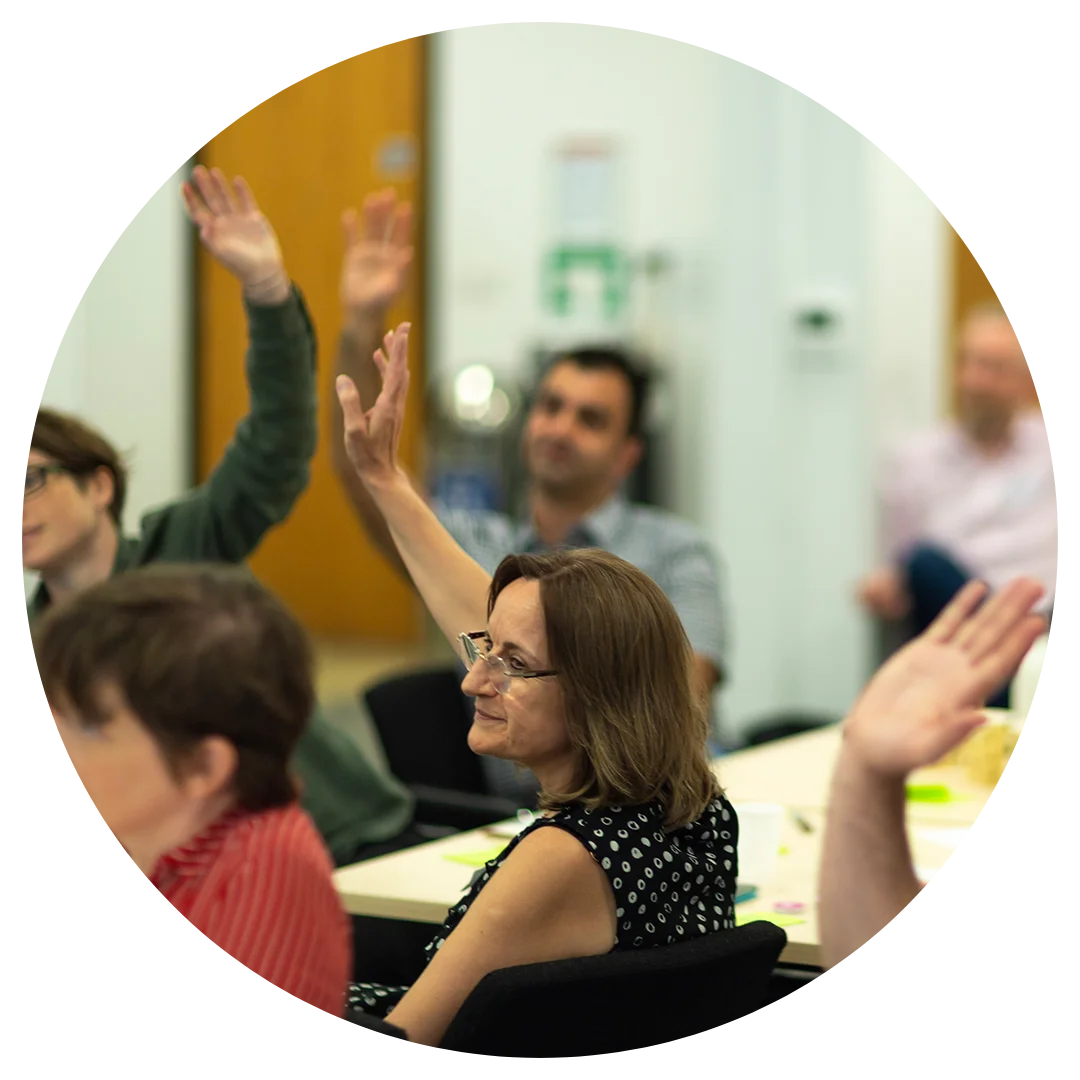
In the planning of our recent annual LOTI CON 2026 event, we decided to make our breakout sessions fun, interactive and exciting and somehow, in the midst of other fun and engaging sessions, we decided to build a starship.
A figurative starship, complete with a professional actor for a Captain and a complex simulation of a community hurtling through the stars in the year 2300. We set a challenge: recover from a micro-meteor strike, balance resources, and bring society together.
Why bother? Because the scale and challenge facing public service provision at the moment requires leaps of thought to new paradigms rather than tinkering around the edges of existing processes. If we want to build the foundation of an innovative public sector, we have to reframe our challenges and flex new muscles that will help us build the future.
In practice, we all know that innovation isn’t just about buying and applying new technology; it’s about testing our capacity to adapt when the systems we rely on are suddenly and violently, in flux. We wanted to give participants the opportunity to see how we handle risk, ambiguity, and each other in such moments and draw their own conclusions on the best way forward.
The Maths vs. The Humans
There was an underlying theme in the simulation of information conflict: quantitative versus qualitative. On the face of it, there were clear quantitative goals for the simulation. Consequently, some participants dived deep into the ‘maths’ of the game seeking the ‘correct’ mathematical answer. Yet, those that did failed to achieve the best outcomes because they ignored the secret missions, which represented the messy and human side of the equation which carried significant weighting in the tally of the final scores.
Sometimes our organisations can or choose to privilege numerical data whilst forgetting that all data exists in a sociological context which also needs to be understood to get the best from the data. In LOTI, we talk about transformational services coming from change in people, processes, data and technology, rather than technology alone. Relationships, which lead to compromises, and hearing the quiet voices in the room can be vital to the creation of success.
Not testing, not learning and not growing
Across some teams, the simulation unearthed interesting views on risk. We observed participants who were so anxious about making an incorrect decision that they avoided committing their plans to the allotted worksheets. This reticence prevented their team members from understanding the emerging strategy, understanding each other’s thinking, which impeded them being able to contribute – leading to the group’s paralysis.
It is a potent metaphor for how it might feel sometimes in the public sector. When we are overly constrained by the fear of getting it wrong, we inadvertently stifle the very innovation we are trying to foster. True progress requires a culture where we can be bold, transparent, and occasionally wrong, provided we learn the lessons quickly. If we cannot experiment in a low-stakes starship, we will certainly struggle to innovate when the stakes are real.
The Creative Reward
Was it a risk? Absolutely. It was resource-intensive, unpredictable, and yes, slightly chaotic. But the reward was a unique, safe space for participants to experience failure. We saw people recognise their own tendencies to dominate, to retreat, or to fear failure and be keen to do something about it.
The starship showed us that we can create the ‘missing feedback loop’ for our teams, a place where we can identify where work skill performance has degraded and where growth is needed, without the fear of real-world consequences.
The format worked. It was fun, energising, and proved that if we are brave enough to build the space (pun intended), our teams are ready to experiment within it. We’ll be running it again. Will you join us on board the starship?